
self-rising flour means the leavening and seasoning are already present in the correct proportions without measuring anything separately. Southern cooks have used self-rising flour for biscuits for generations precisely because it eliminates one category of variables from the process.
Buttermilk does two distinct jobs: it provides the liquid the dough needs to come together, and its acidity reacts with the baking powder in the self-rising flour to produce carbon dioxide — the bubbles that make the biscuits rise and become airy rather than dense. Whole buttermilk (full-fat) produces the best results: its fat content contributes tenderness and a rich, slightly tangy flavor that’s characteristic of good Southern biscuits. The tang of the buttermilk also provides a pleasant flavor contrast to the butter’s richness in the finished biscuit.
Ingredient Notes
Self-rising flour — two cups, loosely spooned and leveled — is the foundation of the recipe. The key preparation note is how you measure it: spoon the flour lightly into the measuring cup rather than scooping directly from the bag, which compresses the flour and produces significantly more than two cups by weight, leading to dense, dry biscuits. Spoon it in, let it mound slightly above the rim, then sweep the back of a straight edge across the top to level. White Lily is the brand most associated with Southern biscuit baking — it’s made from a softer, lower-protein winter wheat that produces particularly tender, fine-textured biscuits. King Arthur and Gold Medal self-rising flour are also excellent and more widely available nationally. If self-rising flour isn’t available in your area, make your own by whisking together two cups of all-purpose flour with one tablespoon of baking powder and half a teaspoon of fine salt. Measure the all-purpose flour first, then add the leavening and salt — do not substitute baking soda for baking powder, as the proportions and chemical reactions are different.
Whole buttermilk — 1½ cups, well-shaken before measuring — is the liquid component and the key to the biscuits’ tender, slightly tangy character. Whole buttermilk (full-fat) is the correct choice: its fat content contributes tenderness that reduced-fat or fat-free buttermilk cannot provide. Shake the carton vigorously before opening to re-incorporate the settled cream and ensure consistent fat distribution throughout the liquid. If whole buttermilk isn’t available, full-fat cultured buttermilk of any kind works; avoid low-fat buttermilk for this recipe. A reliable substitute for buttermilk is whole milk with a tablespoon of white vinegar or lemon juice added — stir and let it sit for 5 minutes until it curdles slightly, then use in the same quantity. This soured milk substitute works well in a pinch but produces a slightly less complex, less tangy flavor than real cultured buttermilk.
Step 6 — Bake
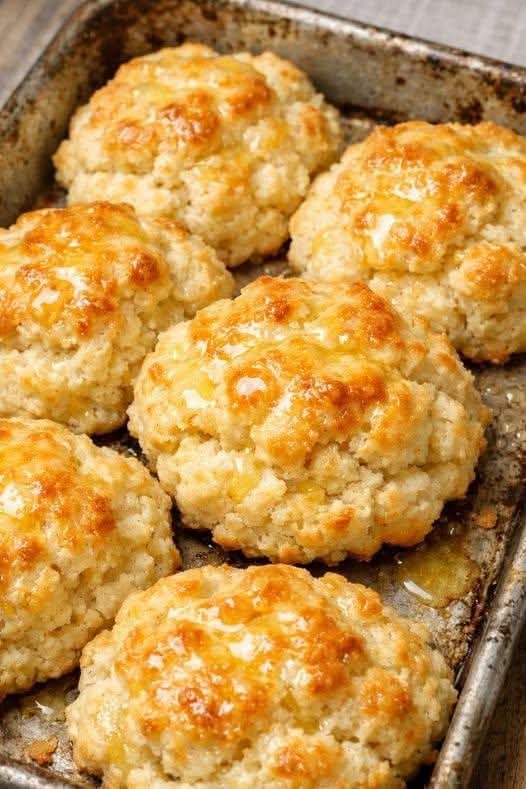
Place the baking sheet on the center rack of the preheated oven and bake for 12 to 15 minutes, until the biscuit tops are deep golden brown — not pale yellow, but genuinely golden with darker brown color at the peaks and edges. The bottoms should be evenly browned as well; check by lifting one biscuit with a spatula at the 12-minute mark. The biscuits should have visibly puffed and be firm to a light touch at the top. Under-baked biscuits are pale and gummy in the interior; properly baked biscuits are golden throughout and cooked through to a fluffy, dry crumb.
Step 7 — Brush with Butter and Serve
Remove the baking sheet from the oven and immediately brush the hot biscuit tops with the remaining melted butter. The butter will absorb into the hot crust, produce a glossy, fragrant surface, and keep the tops soft rather than dry as the biscuits cool. Allow the biscuits to cool for just five minutes — long enough that they won’t burn fingers but short enough that they’re still genuinely warm in the center. Serve immediately.
Tips for the Best Results
Don’t overmix. This is the single most important rule for tender biscuits. Mixing develops gluten, and overworked gluten produces tough, rubbery biscuits. As soon as the flour is incorporated and no dry patches remain, stop. The dough will look rough and slightly lumpy — this is correct.
Spoon and level the flour. Scooping the measuring cup directly into the flour bag packs it significantly, adding as much as 20 to 25% more flour than the recipe calls for. Spooned and leveled flour produces the right dough consistency; scooped flour produces a dry dough that bakes into dense, heavy biscuits.
Use a genuinely hot oven. 425°F is the right temperature for drop biscuits. A lower temperature produces spreading rather than rising. An oven thermometer is worth using — many ovens run 25 to 50°F hotter or cooler than their display suggests, and the difference affects biscuit quality meaningfully.
The five-minute rest matters. It’s tempting to drop the biscuits immediately after mixing, but the brief rest genuinely improves the rise and tenderness of the finished biscuit. Set a timer and let the dough sit while the oven finishes preheating.
Brush with butter twice. The pre-bake brush starts the browning and adds flavor to the surface as it cooks; the post-bake brush while the biscuits are still hot produces the shiny, richly fragrant surface that makes fresh biscuits so appealing. Don’t skip the second brush.
Frequently Asked Questions
What if I don’t have self-rising flour?
Make your own by thoroughly whisking together two cups of all-purpose flour with one tablespoon of baking powder and half a teaspoon of fine salt. Use this mixture in exactly the same way as self-rising flour. The result will be very close to the self-rising flour version; the only variation is that home-mixed self-rising flour tends to produce a slightly heartier, denser biscuit than the softer Southern self-rising varieties like White Lily, which use lower-protein flour.
Can I use regular milk instead of buttermilk?
You can, but the biscuits will be noticeably less tender and less flavorful. The acid in buttermilk reacts with the baking powder to produce more lift, and the tang of the buttermilk contributes a characteristic Southern biscuit flavor that regular milk can’t replicate. If buttermilk isn’t available, make a substitute by stirring one tablespoon of white vinegar or lemon juice into 1½ cups of whole milk and letting it sit for five minutes until it curdles slightly. This produces a reasonable approximation of buttermilk’s acidity, though not its full flavor.
Why are my biscuits dense?
The most common cause is over-measuring the flour — scooping the cup directly into the flour bag rather than spooning and leveling adds significantly more flour than the recipe requires, producing a stiff dough that bakes dense and dry. The second most common cause is overmixing — too many stirs develop gluten that makes the texture tough rather than tender. Mix only until combined, then stop. A third possibility is a too-cool oven; check your oven temperature with a thermometer.